

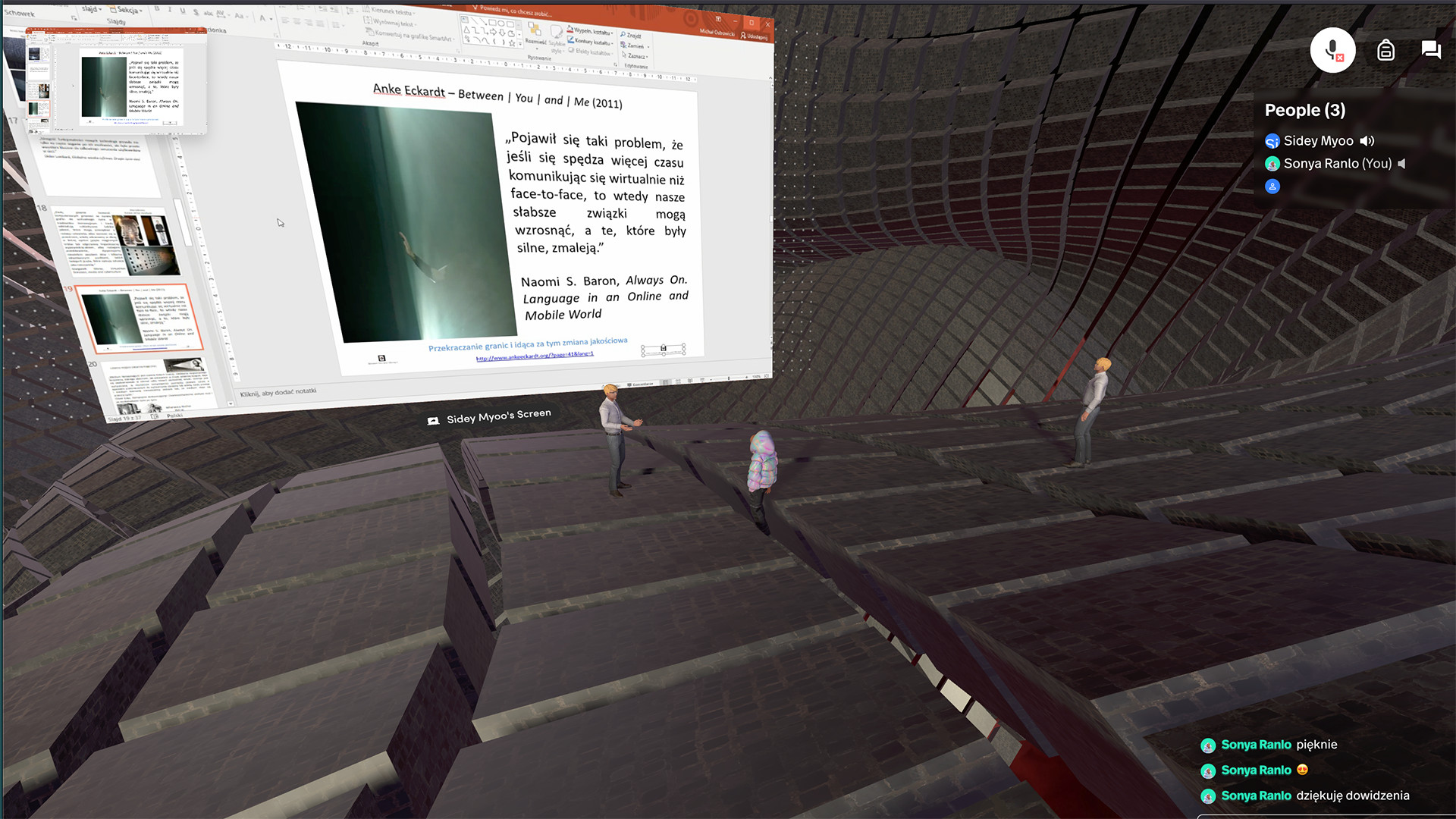
Academia Electronica is an open branch of the Jagiellonian University that operates in virtual reality. It has been active continuously since 2007 in the virtual world of Second Life, found its place in AltSpaceVR between 2020 and 2022, and since 2022 has existed in Spatial. Academia extends the university into virtual reality, representing the Jagiellonian University in VR. It is a research and educational institution, innovative and developmental, primarily dedicated to interdisciplinary studies of virtual reality.
Academia Electronica is the result of scientific research on virtual reality conducted by Sidey Myoo since the early 1990s. This university space serves as an example of the practical application of studies derived primarily from the analysis presented in ontoelectronics – an ontology oriented toward virtual reality, where VR is understood as an alternative sphere of being in relation to the physical world. These studies also include futurological analysis aimed at identifying the paradigms shaping contemporary and future reality, including the postulate that virtual reality will continue to expand and evolve through technological development and the increasing transfer of human activity into the network. Within Academia, interdisciplinary research is carried out by scholars representing fields ranging from computer science and cognitive science to the broadly understood humanities. This research focuses mainly on contemporary trends in science in relation to technology – such as media, cyberculture, artificial intelligence, and virtual reality itself – along with phenomena like immersion, telepresence, teleexistence, and participation.
Scientific activity within Academia has always been a priority, given its innovative nature, intellectual freedom, cognitive value, and the capacity for scientific observation and integration of its outcomes into the developmental mechanisms of the contemporary world. The academic activity is oriented toward the progressive advancement of science, the continuous pursuit of discovery, and the formulation of postulates that may evolve into leading ideas of the future. To this end, researchers employ various methods, including philosophical approaches that consider the significance of ontological postulates, the truth status derived from the evaluation of studied content, and ethical assessment. Methodologies such as cybernetics and Chaos Theory are also applied, as well as all forms of rationalized intuition – primarily a priori methods or participant observation – along with diverse forms of knowledge presentation. Research results, for example those related to remote education, are immediately implemented experimentally into practice. Through its focus on innovation, Academia creates conditions for multidirectional analyses and the formulation of conclusions leading to scientific discoveries and the advancement of knowledge.
The underlying intention behind Academia’s existence is to create and introduce the university into the Metaverse – a university of the future – and to define a new direction for education based on the development of inter-university studies in VR, shaped through the profiling of disciplines and the selection of courses available across universities.
Questions are fundamental, but at a certain point, the answers become more important.
Academia has brought together a number of scholars from both the Jagiellonian University and other academic centers in Poland, who either teach their own courses there or have participated in the lecture series From Student to Professor, as well as researchers from international institutions who have taken part in the series Science Beyond Borders – The Global Electronic Academy. Hundreds of students have passed through its virtual auditoriums – many of whom have presented their own theses and ideas that later developed into academic articles or final degree projects.
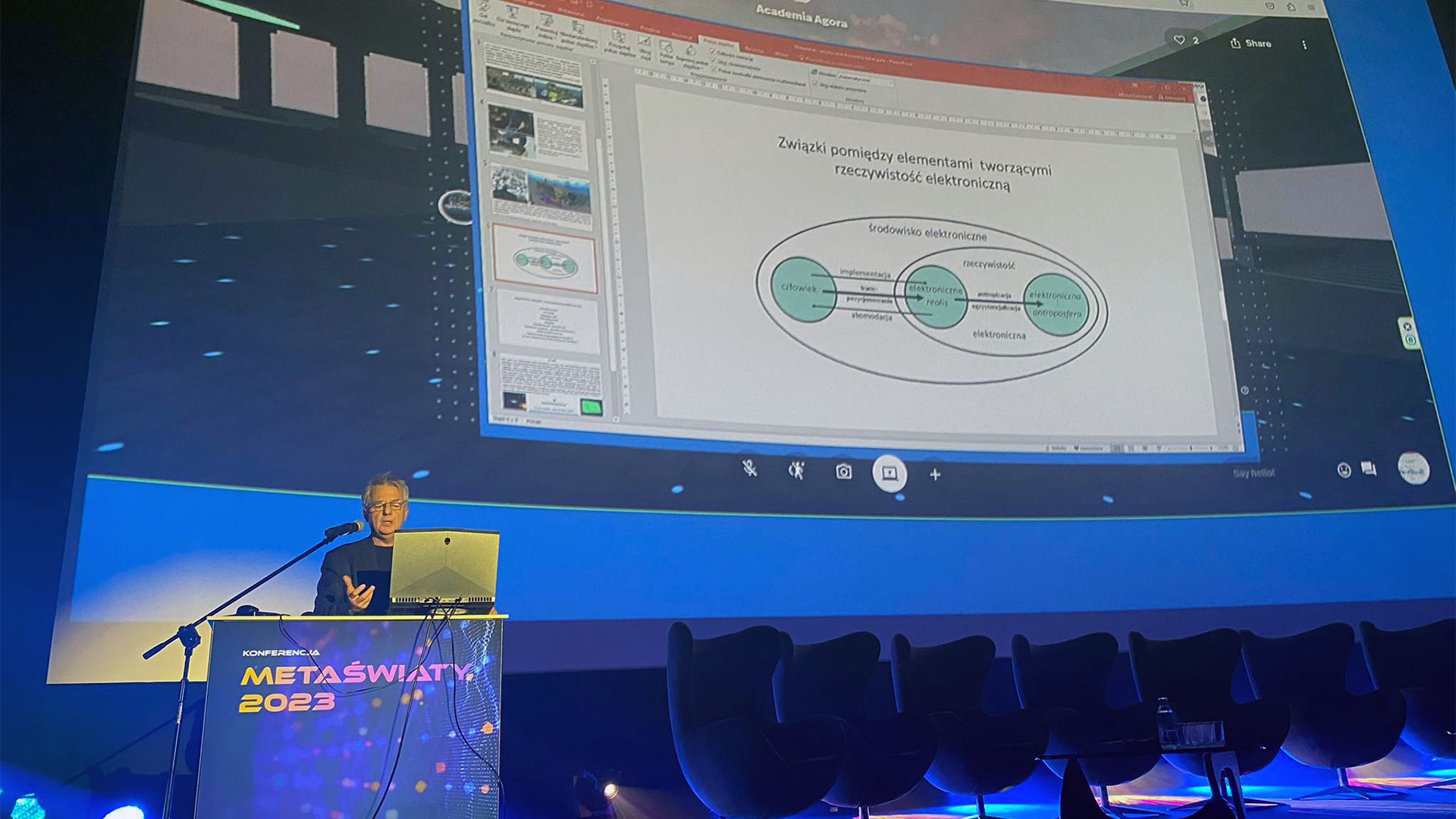
In 2008, Academia hosted its first official academic course, The Electronic Environment as Human Reality. It was also the site of the first public defenses in Poland, held openly online: a doctoral dissertation (2012), a master’s thesis (2012), and a bachelor’s exam (2015). Academia organized three editions of Poland’s first remote academic conference, Philosophy of Technology (Second Life, 2013–2015), where participants appeared as avatars. Later, in 2018 and 2019, also in Second Life, two more conferences – The Human in the Technological World—were held, the latter of which was international in scope. In 2022 (AltSpaceVR), 2023 (Spatial), and 2024 (Spatial), three more scientific conferences took place – Virtualium I–III – marking the first academic conferences in Poland conducted entirely in VR.
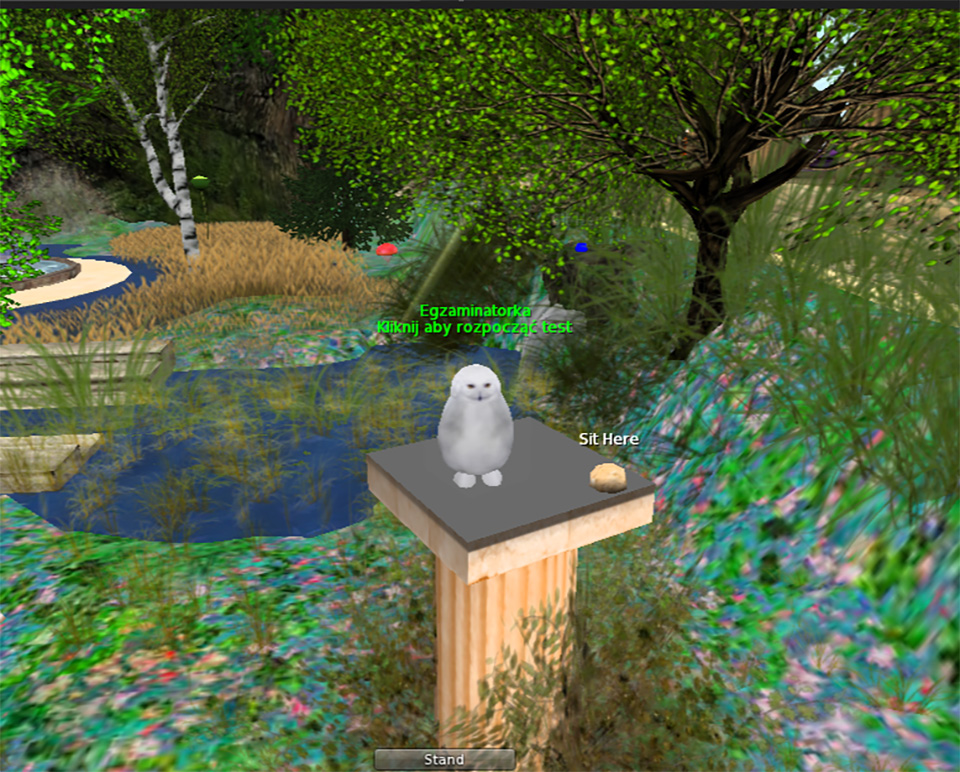
In 2022, Academia conducted the first master’s examination in Poland held in VR, in the virtual world of Spatial, using Oculus technology. Since 2015, Academia has hosted the Philosophy of Technology Section of the Jagiellonian University’s Philosophy Students’ Research Society, which gathers young scholars engaged in lectures, literature presentations, and the development of original research projects. Between 2015 and 2020, Academia in Second Life operated the world’s first bot capable of administering an official test-based examination, which conducted final exams for four university courses in philosophy, cognitive science, and Polish studies.
In June 2025, Academia hosted the first examination in Poland involving artificial intelligence (ChatGPT), held within the Teacher Training Program in Polish Philology at the Faculty of Polish Studies, Jagiellonian University. The history of philosophy exam was taken by 23 students out of a group of 61.
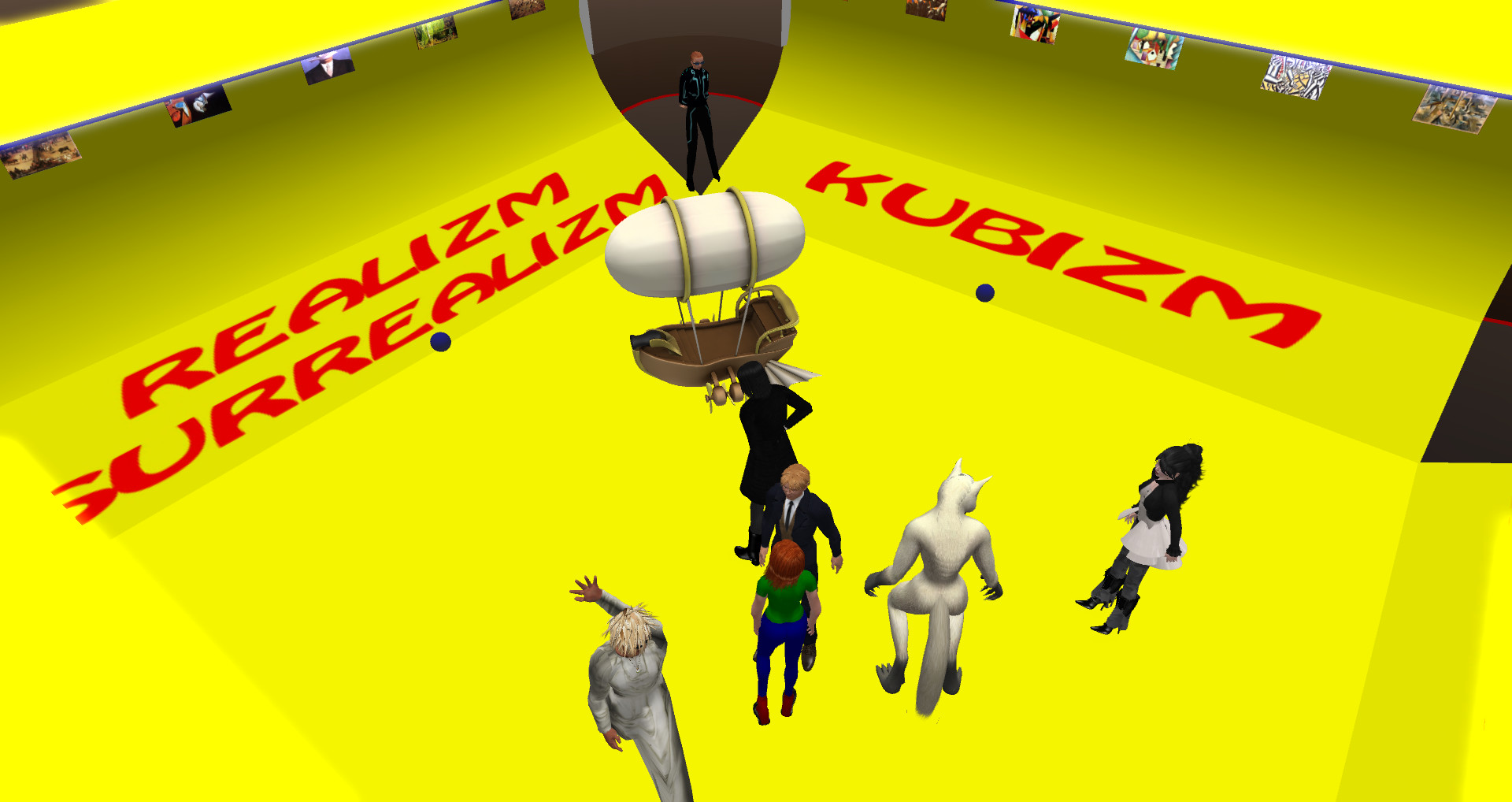
Academia also continues to run exhibition activities in its academic art galleries.
Academia has been presented at numerous congresses and conferences both in Poland and abroad. It is the first institution of its kind in Poland, and possibly in the world, to serve as a university delegation within virtual reality.
There is also a well-established collaboration with other academic and research institutions, expressed through ongoing work within the Institute of Philosophy at the Jagiellonian University (from which Academia originates), as well as with the Institute of Sociology, the Institute of Audiovisual Arts, the Jagiellonian Centre for Digital Humanities, the Department of Cognitive Science at the Jagiellonian University, the Department of Information and Digital Culture at Maria Curie-Skłodowska University in Lublin, the Department of Information Technologies and Media at the AGH University of Kraków, and the Academy of Fine Arts in Kraków. Academia has also attracted the interest of an international network of participants working within the Horizon grant Communities and Artistic Participation in Hybrid Environments (CAPHE, 2023–2026), and collaborates with another Horizon project, Imersive Digitisation: Upcycling Cultural Heritage Towards New Reviving Strategies (IMPULSE, 2024–2027). Both projects are coordinated at the Jagiellonian University.
For over a decade, Academia has been co-created by two volunteers: Mgr Jolanta Różańska-Chowańska (RL) | Neutrinka Lisle (Netname) and Mgr inż. Dominik Undak | Dex Euromat (Netname), who provide its virtual form and technical infrastructure. Special thanks are also due to Mgr Sergiusz Różański | Serek Aeon (Netname) for maintaining Academia’s website. Likewise, gratitude is extended to many individuals known only by their online names, who have contributed to Academia’s existence – making it the result of engagement from a wide range of communities, not only academic ones.
We invite students to take part in courses offered within Academia, and lecturers to conduct classes, research, and organize events inspired by the idea of academic collaboration.
10 Truths about the Electronic World
Sidey Myoo
Declaration of morality for a human in the Electronic World
Sidey Myoo
Academia Electronica – Second Semester / Courses and Collaborations
Semesters:
Academia Electronica – II semester 2008–2009
Academia Electronica – II semester 2009–2010
Academia Electronica – II semester 2010–2011
Academia Electronica – II semester 2011–2012
Academia Electronica – II semester 2012–2013
Academia Electronica – II semester 2013–2014
Academia Electronica – II semester 2014–2015
Academia Electronica – II semester 2015–2016
Academia Electronica – 2016–2017
Academia Electronica – 2017–2018
Academia Electronica – 2018–2019
Academia Electronica – 2019–2020
Academia Electronica – 2020–2021
Academia Electronica – 2021–2022
Academia Electronica – 2022–2023
Courses offered in Academia Electronica (in Second Life or Spatial):
Sidey Myoo:
The Electronic Environment as Human Reality (Philosophy)
Aesthetics B – Lecture/Exercises (Philosophy)
Electronic Art (Philosophy)
Network Philosophy (Philosophy/Cognitive Science)
Main Problems of Contemporary Aesthetics (Polish Studies)
Communicational Technologies of the Future (Sociology)
History of Philosophy (Polish Studies)
Dr. Hab. Jakub Petri:
Aesthetics B – Exercises (Philosophy)
Performative Aesthetics of Urban Space (Philosophy)
CAPHE Collaboration:
Academia collaborates with an international group of participants within the Horizon grant The Communities and Artistic Participation in Hybrid Environments (CAPHE, 2023–2026) as well as Immersive Digitisation: Upcycling Cultural Heritage towards New Reviving Strategies (Impulse, 2024–2027).
Philosophy of Technology Section of the Philosophy Students’ Research Society (UJ):
Facebook Page
Sidey Myoo
Prof. dr hab. Michał Ostrowicki
Email: michal.ostrowicki@uj.edu.pl, sidey.myoo@uj.edu.pl
Strona: http://www.sideymyoo.art.pl
Studio of Aesthetics
Institute of Philosophy
Faculty of Philosophy
Adres: Grodzka 52, 31-044 Kraków
Acedemia Electronica
Actual website of Academia Electronica:
Defending academic papers in virtual worlds
Master's degree defence at Academia Electronica in Spatial, Digital Beam auditorium: https://youtu.be/2fXtiybH82QUJ Digital Humanities Fair
19–20 stycznia 2024
Wydział Filologiczny, al. Mickiewicza 9B, Collegium Paderevianum, V piętro


.jpg)
.jpg)
.jpg)
.jpg)
.jpg)
.jpg)
.jpg)
.jpg)
.jpg)
.jpg)


.jpg)
.jpg)
.jpg)
.jpg)
.jpg)
.jpg)
.jpg)

.jpg)
.jpg)
.jpg)