Science dissemination - Wydział Filozoficzny

The IDUJ program funds for 2026 have been fully allocated.
As a result, the call for new applications has been suspended.

 
The rules for project implementation and spending the funds remain unchanged (a short overview is provided below). In the case of projects covering both semesters, the release of the second part of the funding depends on the full use of the funds planned for the first semester. The use of the first part of the funding will be verified at the end of June. If any funds become available at that time - due to not using the first part or not starting the second - additional projects may be funded from among the applications already submitted that have not yet received support, or the call may be reopened.

***

In the current year, the IDUJ budget is divided into two semesters. Funds planned for the first semester should be spent by the end of June (and obligated, with ‘obligo’ created, by the end of May), while funds planned for the second semester should be spent by the end of October (and obligated by the end of September).
 
Note: Receiving a funding decision does not mean that an obligation (‘obligo’) has been created. An obligation is created for specific expenses at the request of the project manager. Only funds that are supported by appropriate documents - such as an invoice, travel request, contract, accounting note, etc. - may be obligated.
 
In the case of projects covering both the first and second semesters, their schedule should be divided accordingly. It will not be possible to transfer funds from the first to the second semester.
 
Due to the limited budget for 2026 and the intention to support as many staff members as possible, there is a limit of PLN 50,000, which is the total amount that each eligible person may apply for across all ID UJ calls this year.
 
***

More detailed information can be found in the staff mailing. If you have any questions, please feel free to contact us.

***

As part of the Excellence Initiative, there is a possibility of financial support for activities in the field of popularization of science. If you are interested, please contact Marta Maj, PhD (marta.maj@uj.edu.pl).

You can find information about the dissemination of scientific activities at the Faculty below.

Dlaczego starsze osoby nie szczepią się przeciwko grypie? Badaczki UJ analizują decydujące czynniki.
What may influence older Europeans' decision about the seasonal influenza vaccine? A literature review of socio-cultural and psycho-social factors related to seasonal influenza vaccination uptake
aktualności ceapp instytut socjologii nauka sdnh uj publikacje popularyzacja

What are the reasons older adults choose not to get vaccinated against influenza? Researchers from Jagiellonian University analyze key factors

03.09.2025
Although vaccinations are among the most effective forms of protection against infectious diseases, many older Europeans still choose not to get vaccinated. Research and vaccination promotion programs should more thoroughly consider factors such as older adults’ perceptions of health, their experiences with influenza or vaccination itself - according to analyses conducted by Idalina Odziemczyk-Stawarz, a PhD candidate at the Doctoral School of Social Sciences at Jagiellonian University, together with her supervisor, Dr. hab. Jolanta Perek-Białas, Professor at JU.
Read More o What are the reasons older adults choose not to get vaccinated against influenza? Researchers from Jagiellonian University analyze key factors
Projekt “Polonica Philosophica Orientalia. Filozofia w Rzeczypospolitej XVI-XVIII w. i historiografia filozofii w Polsce, Litwie, Białorusi i Ukrainie”
aktualności instytut filozofii projekty publikacje popularyzacja

What can we learn from the thinkers of the Polish–Lithuanian Commonwealth?

02.09.2025
Issues of post-truth, manipulation of public opinion, incitement of conflict, and indifference to threats were well known to the thinkers of the Polish–Lithuanian Commonwealth. How did philosophical thought develop in such a melting pot of nationalities, religions, and political ideologies? Can we, as a society, learn something by looking back six centuries? These questions are explored in an international project led by Prof. Steffen Huber from the Jagiellonian University.
Read More o What can we learn from the thinkers of the Polish–Lithuanian Commonwealth?
Zanurzeni w VR. Jak awatary zmieniają naszą percepcję? [w:] Technopaideia. Zaawansowane technologie w edukacji humanistycznej
aktualności instytut filozofii publikacje popularyzacja

Immersed in VR. How avatars change our perception?

01.09.2025
As we spend more and more time in virtual reality, will we become increasingly emotionally engaged with it? How will it change our lives and ourselves? Will we one day have to choose between two modes of existence: physical and electronic? These are the kinds of questions explored by Sidey Myoo (Prof. Michał Ostrowicki), who conducts research and teaching at Academia Electronica – the virtual branch of the Jagiellonian University.
Read More o Immersed in VR. How avatars change our perception?
aktualności instytut psychologii publikacje popularyzacja

Subjective energy as a catalyst for extreme goal pursuit

30.07.2025
The more energy we feel within ourselves, the more likely we are to set extreme goals and tasks - such as following a draconian diet, seeking fame, or climbing K2. A high level of subjectively perceived energy also makes us view tasks with greater optimism, which further boosts our motivation, according to research by psychologists from Jagiellonian University.
Read More o Subjective energy as a catalyst for extreme goal pursuit
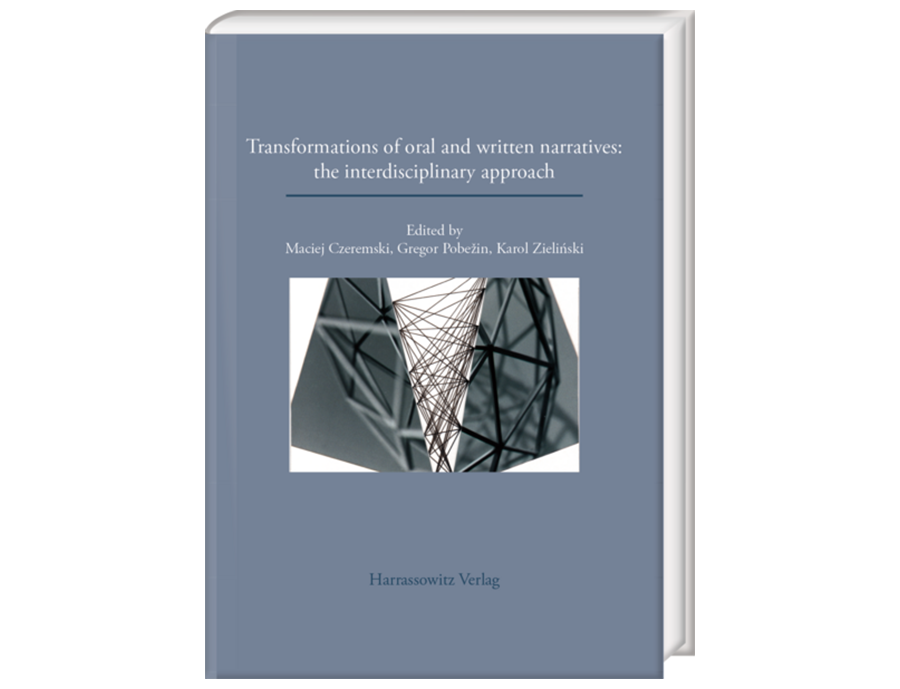
Jakub Bohuszewicz, A dream as a domain of warfare in Parakanã and Evenki shamanisms. [w]
Transformations of oral and written narratives: the interdisciplinary approach
aktualności instytut religioznawstwa publikacje popularyzacja

Is sleep a form of rest? In some cultures, it’s a battlefield and a way of bonding

25.07.2025
Does sleep always mean rest? In the Amazonian Parakanã culture and the Siberian Evenki culture, not necessarily. In both communities, dreaming is not a passive experience. Instead, it serves as a tool for communicating with spirits and even as a battlefield that helps integrate the tribe. Dr. Jakub Bohuszewicz from the Institute of Religious Studies at the Faculty of Philosophy of the Jagiellonian University writes about the surprising similarities between these geographically distant peoples.
Read More o Is sleep a form of rest? In some cultures, it’s a battlefield and a way of bonding