Science dissemination - Wydział Filozoficzny

The IDUJ program funds for 2026 have been fully allocated.
As a result, the call for new applications has been suspended.

 
The rules for project implementation and spending the funds remain unchanged (a short overview is provided below). In the case of projects covering both semesters, the release of the second part of the funding depends on the full use of the funds planned for the first semester. The use of the first part of the funding will be verified at the end of June. If any funds become available at that time - due to not using the first part or not starting the second - additional projects may be funded from among the applications already submitted that have not yet received support, or the call may be reopened.

***

In the current year, the IDUJ budget is divided into two semesters. Funds planned for the first semester should be spent by the end of June (and obligated, with ‘obligo’ created, by the end of May), while funds planned for the second semester should be spent by the end of October (and obligated by the end of September).
 
Note: Receiving a funding decision does not mean that an obligation (‘obligo’) has been created. An obligation is created for specific expenses at the request of the project manager. Only funds that are supported by appropriate documents - such as an invoice, travel request, contract, accounting note, etc. - may be obligated.
 
In the case of projects covering both the first and second semesters, their schedule should be divided accordingly. It will not be possible to transfer funds from the first to the second semester.
 
Due to the limited budget for 2026 and the intention to support as many staff members as possible, there is a limit of PLN 50,000, which is the total amount that each eligible person may apply for across all ID UJ calls this year.
 
***

More detailed information can be found in the staff mailing. If you have any questions, please feel free to contact us.

***

As part of the Excellence Initiative, there is a possibility of financial support for activities in the field of popularization of science. If you are interested, please contact Marta Maj, PhD (marta.maj@uj.edu.pl).

You can find information about the dissemination of scientific activities at the Faculty below.

Framing historical violence in geopolitical space: How describing the location of violence within national borders affects assessments of collective responsibility over time and across communication partners, dr hab. Lucas B. Mazur, Instytut Pedagogiki UJ
aktualności instytut pedagogiki publikacje popularyzacja

The geography of guilt: how location shapes perceptions of historical violence

18.07.2025
How much can words change the way we understand the past? Research by dr hab. Lucas B. Mazur from the Jagiellonian University shows that indicating the location where historical violence occurred significantly influences whom we hold responsible for it. Specific geographical terms can shape collective guilt and create lasting social narratives around difficult historical events.
Read More o The geography of guilt: how location shapes perceptions of historical violence
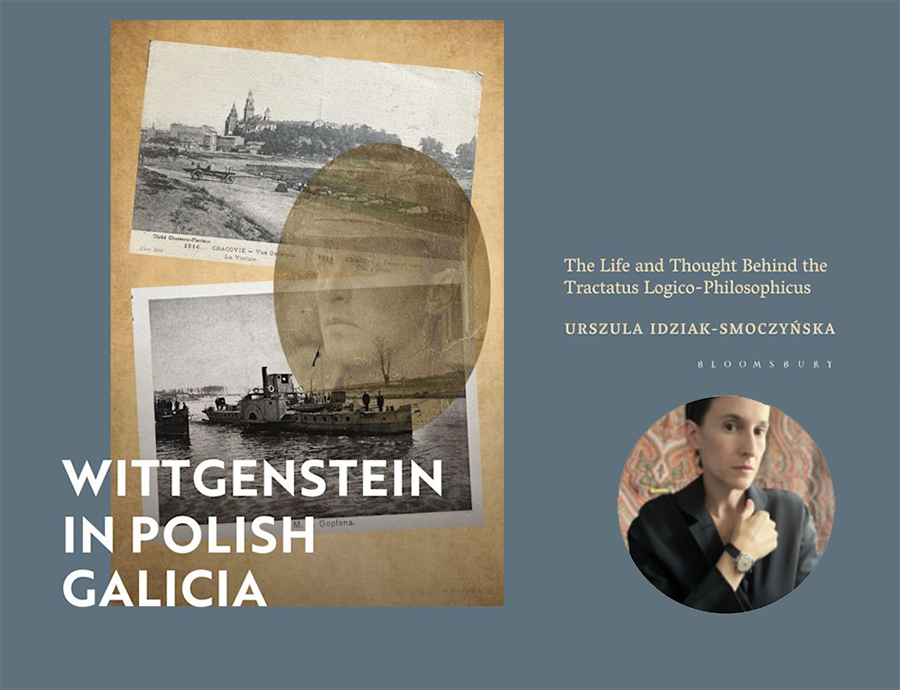
Wittgenstein in Polish Galicia The Life and Thought Behind the Tractatus Logico-Philosophicus.
Badaczka UJ odsłania polskie ścieżki Wittgensteina
aktualności instytut religioznawstwa publikacje popularyzacja

Jagiellonian University scholar uncovers Wittgenstein’s polish paths

07.07.2025
The time spent on the front lines of World War I, in the lands of Polish Galicia, was a turning point for one of the most famous philosophers of the 20th century – Ludwig Wittgenstein. It was a period during which he created his greatest work and underwent a profound spiritual transformation. However, biographies usually devote only a few pages to these years. This changes with the publication by Dr. Urszula Idziak-Smoczyńska from the Institute of Religious Studies at the Faculty of Philosophy of the Jagiellonian University, who describes the pivotal events in the philosopher’s life spent on Polish soil and their philosophical and literary background.
Read More o Jagiellonian University scholar uncovers Wittgenstein’s polish paths
The Relationship Between Self-Esteem and Aggressive Behavior: Exploring the Mediating Role of Loneliness and Sympathy for Violent Radicalization.
Co łączy samoocenę, samotność i podatność na radykalne ideologie z agresją u młodych dorosłych?
aktualności instytut pedagogiki publikacje popularyzacja

From outcasts to radicals: the relationship between loneliness and aggression in young adults

16.06.2025
Low self-esteem in young adults can lead to loneliness, which in turn may foster aggressive behavior and increase susceptibility to radical ideologies that justify aggression, according to analyses by researchers from the Institute of Pedagogy at the Faculty of Philosophy of the Jagiellonian University. The results of their study show the importance of addressing issues related to loneliness and radicalisation, with a particular focus on promoting inclusive environtments and social belonging.
Read More o From outcasts to radicals: the relationship between loneliness and aggression in young adults
Dobra relacja z nauczycielem to wyższe kompetencje społeczne dzieci
aktualności instytut pedagogiki publikacje popularyzacja

Dobra relacja z nauczycielem to wyższe kompetencje społeczne dzieci

12.06.2025
Rozumienie zachowań i emocji innych sprzyja budowaniu bardziej pozytywnych relacji z nauczycielem, a bliskość wspiera dzieci w ich dalszym funkcjonowaniu społecznym - pokazuje badanie z udziałem naukowców Instytutu Pedagogiki Wydziału Filozoficznego UJ. Ta emocjonalna więź okazuje się szczególnie cenna w pierwszych latach edukacji szkolnej, kiedy kontakty z rówieśnikami nabierają szczególnego znaczenia dla dobrostanu społecznego dziecka.
Read More o Dobra relacja z nauczycielem to wyższe kompetencje społeczne dzieci
Od karteczek po Zooma. Jak techniki komunikacyjne współtworzą naszą codzienność
aktualności instytut filozofii publikacje popularyzacja

Od karteczek po Zooma. Jak techniki komunikacyjne współtworzą naszą codzienność

10.06.2025
Wideokonferencje, telefony, ulotki czy nawet zwykłe karteczki informacyjne to technologie komunikacyjne, których prawdziwa rola ujawnia się dopiero w relacji z człowiekiem, jego emocjami i przestrzenią. Ich znaczenie i sposób wykorzystania oraz to, jak współtworzą i zmieniają naszą codzienność badali socjologowie z Wydziału Filozoficznego UJ.
Read More o Od karteczek po Zooma. Jak techniki komunikacyjne współtworzą naszą codzienność